CASE STUDY · WEBSITE AND PRINT© 2026

Institutional memory for credit committees, designed and built in code.
alfa+
Institutional memory for credit committees, designed and built in code.
alfa+The site, the product identity and the print library, built together so a change in one never meant a redo in another.
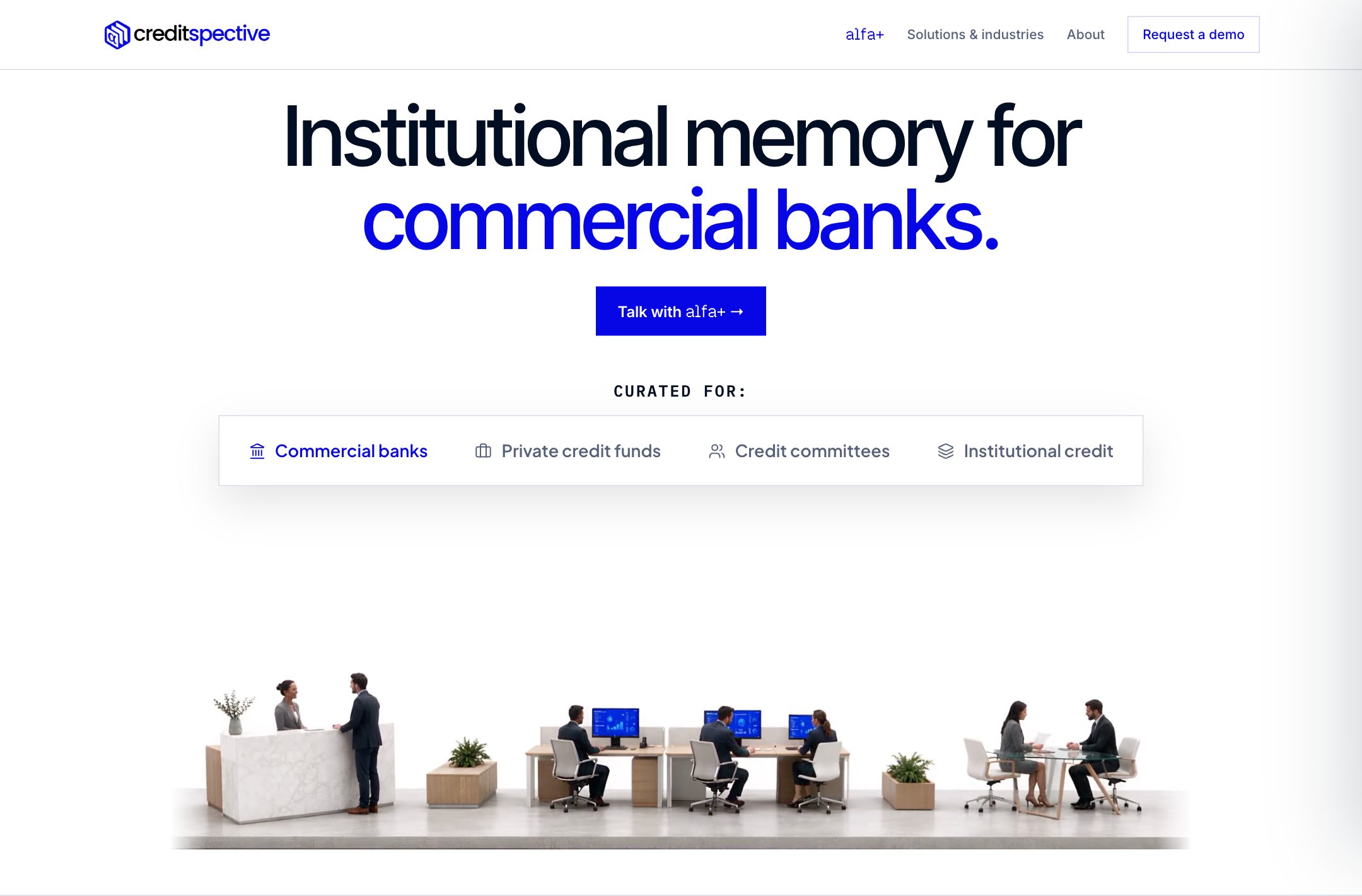
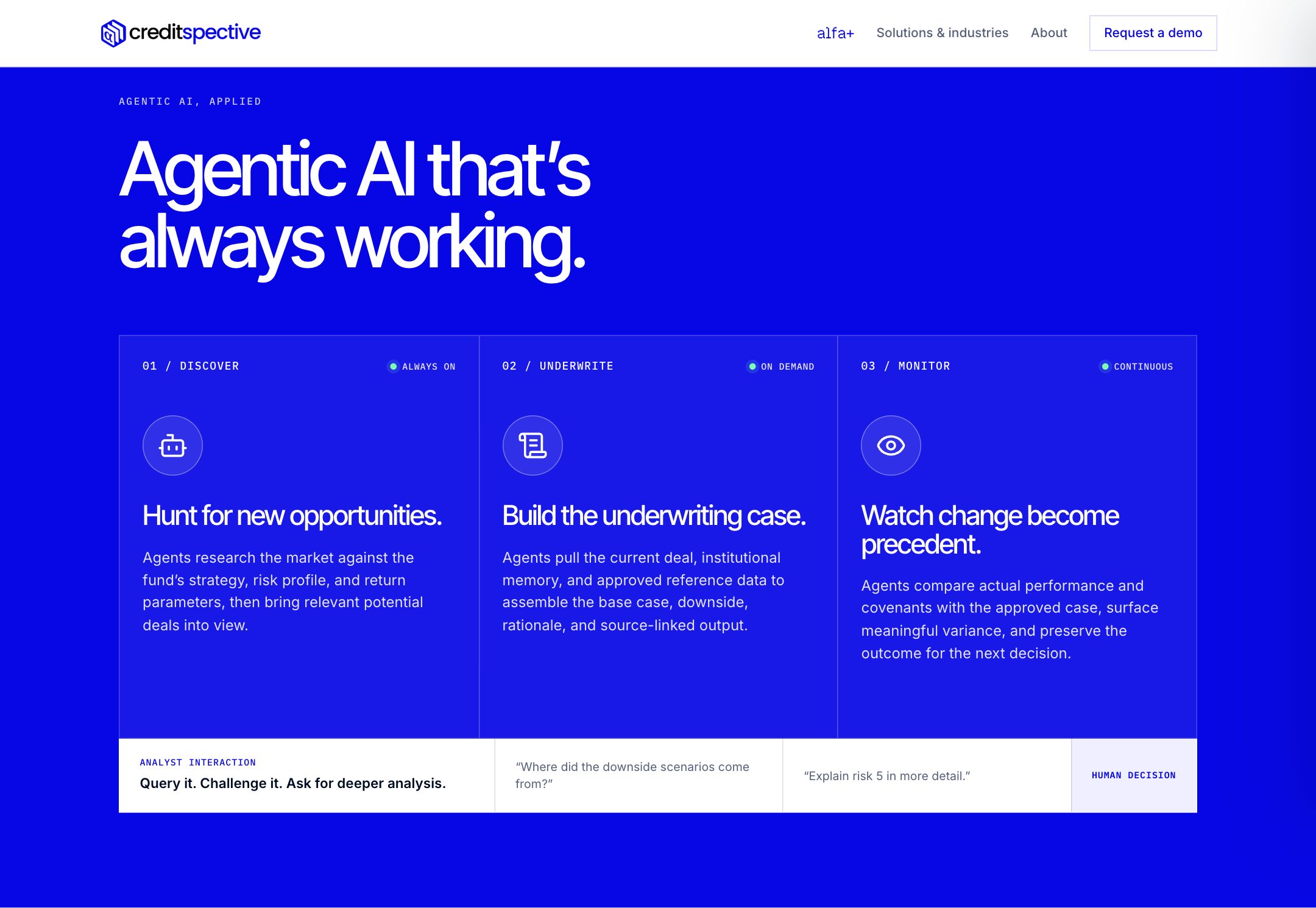

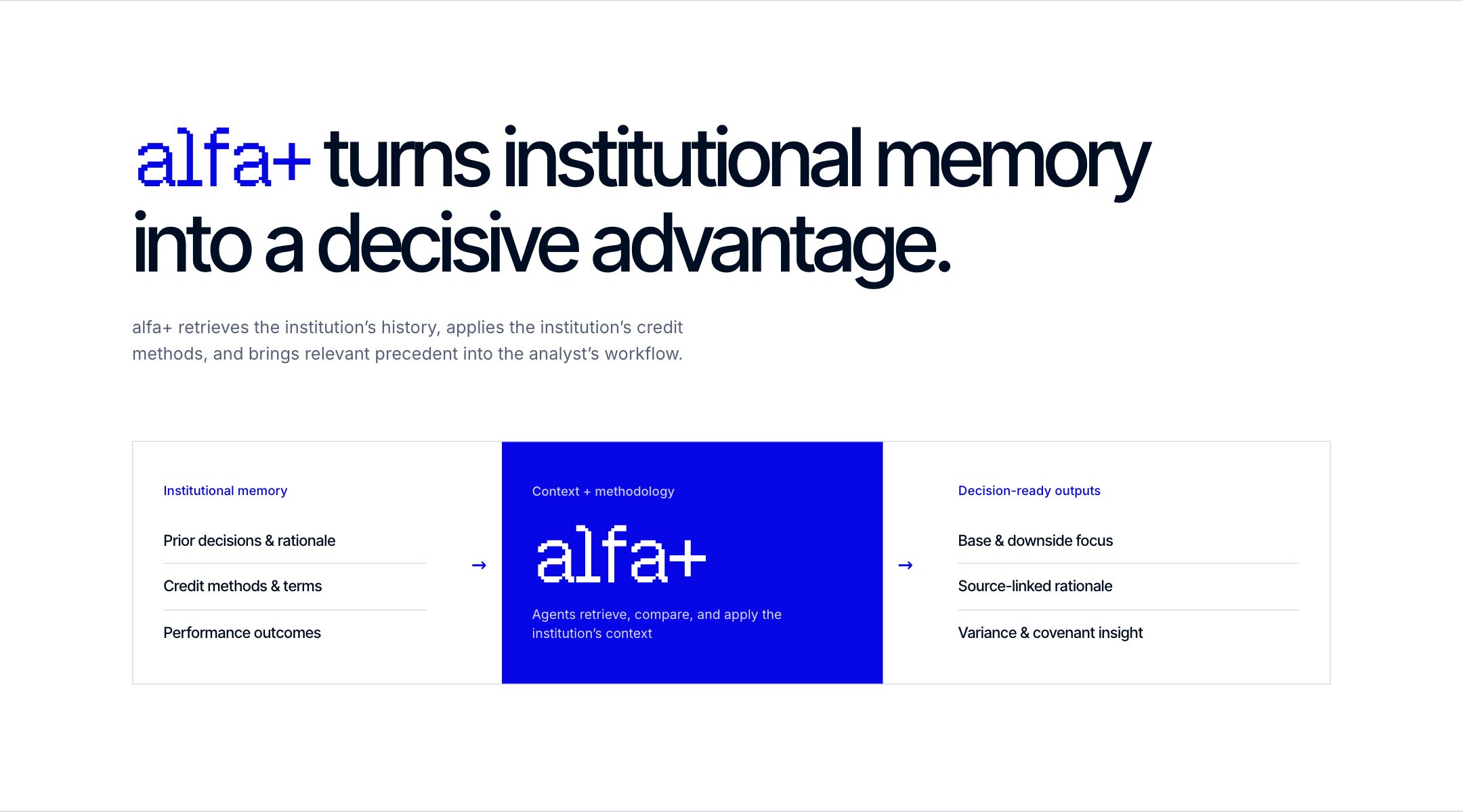
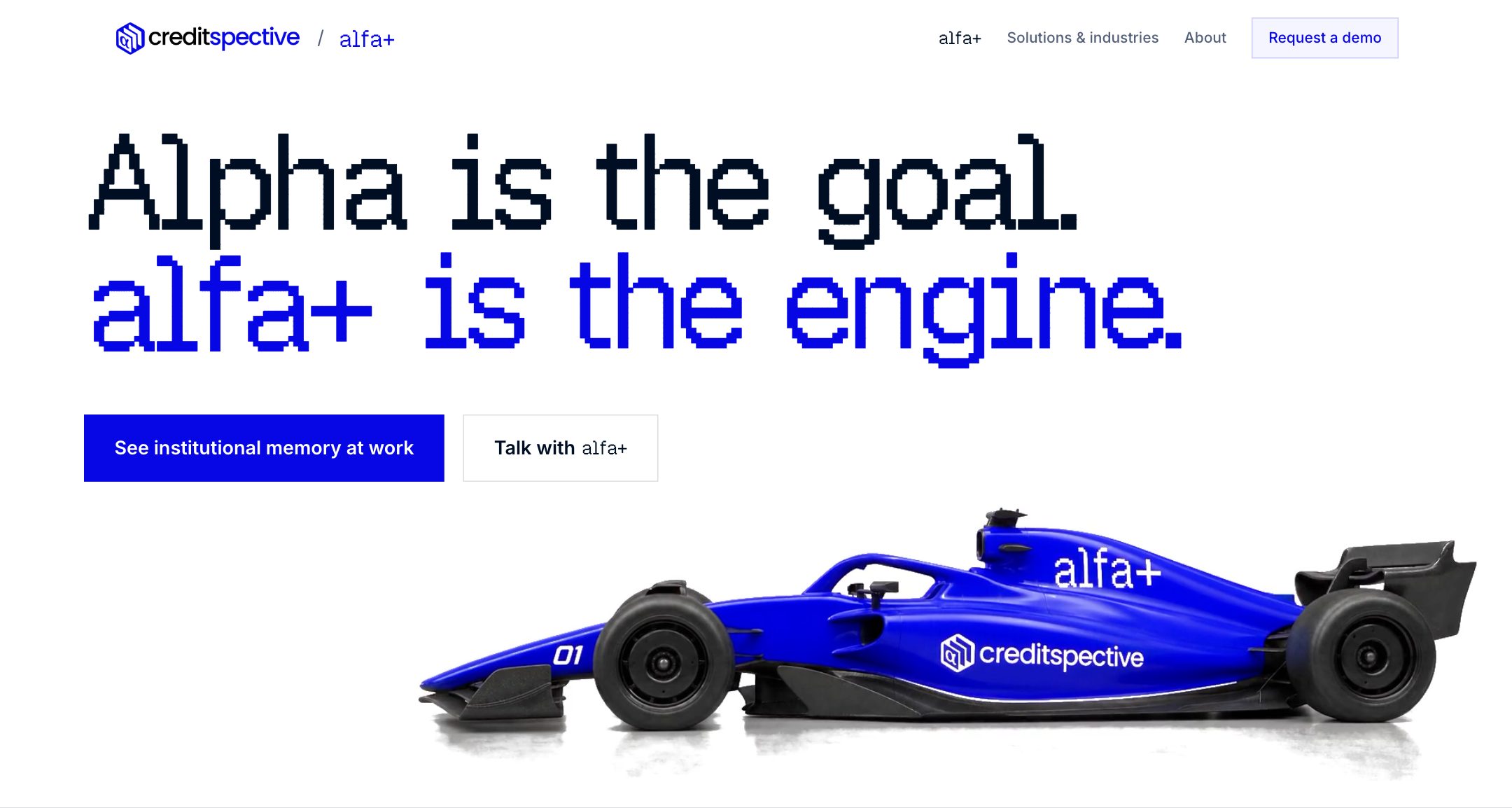

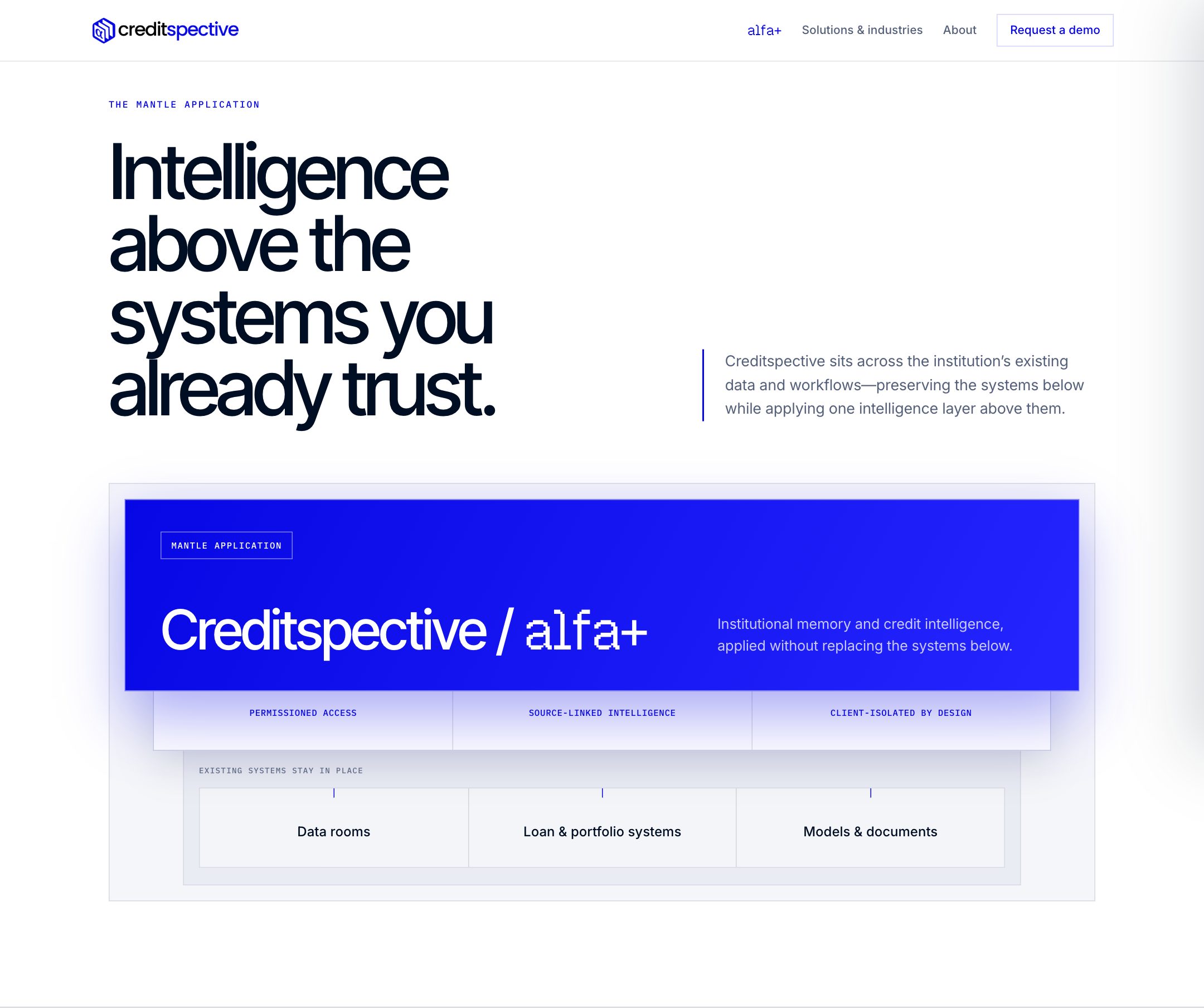
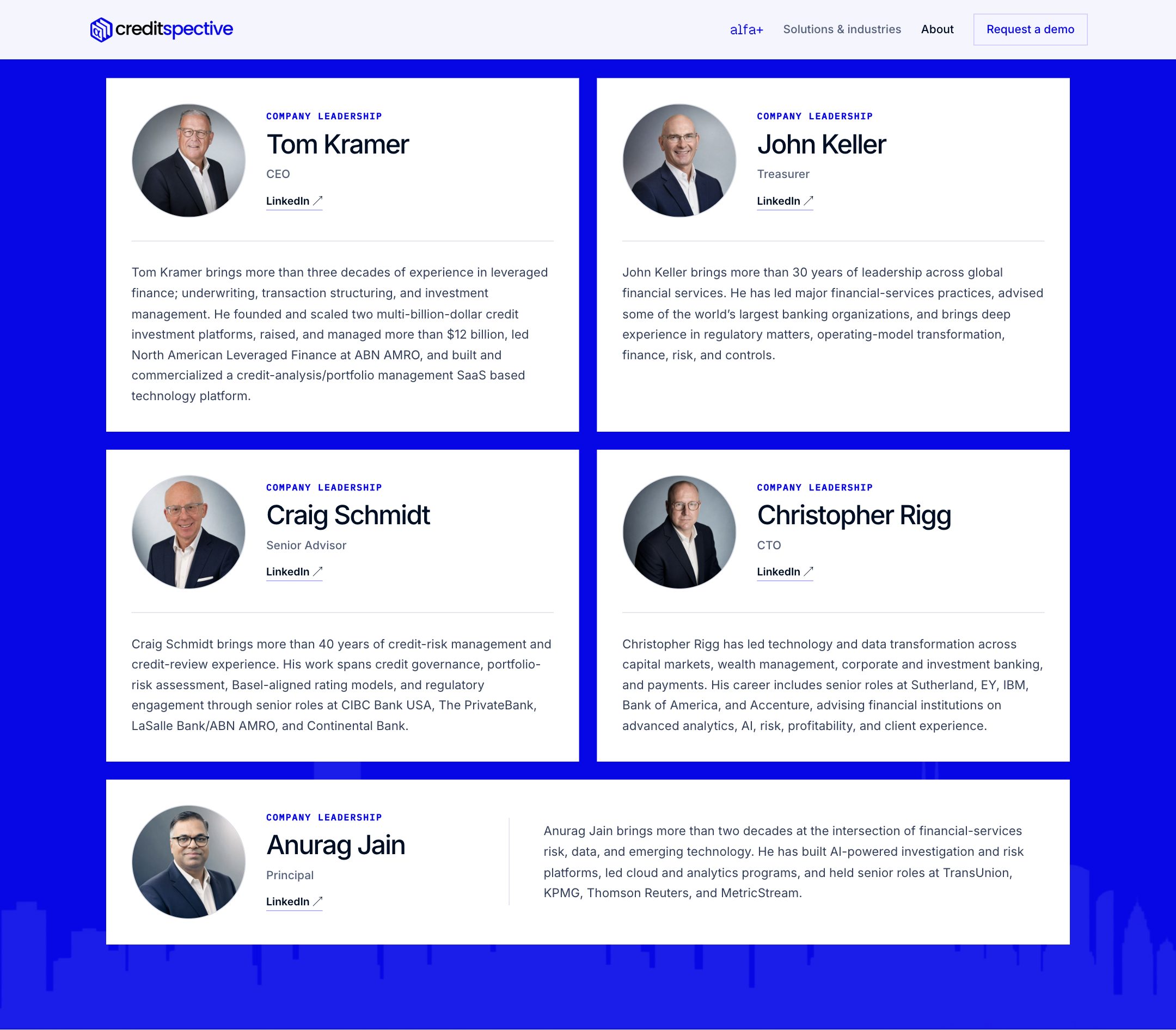

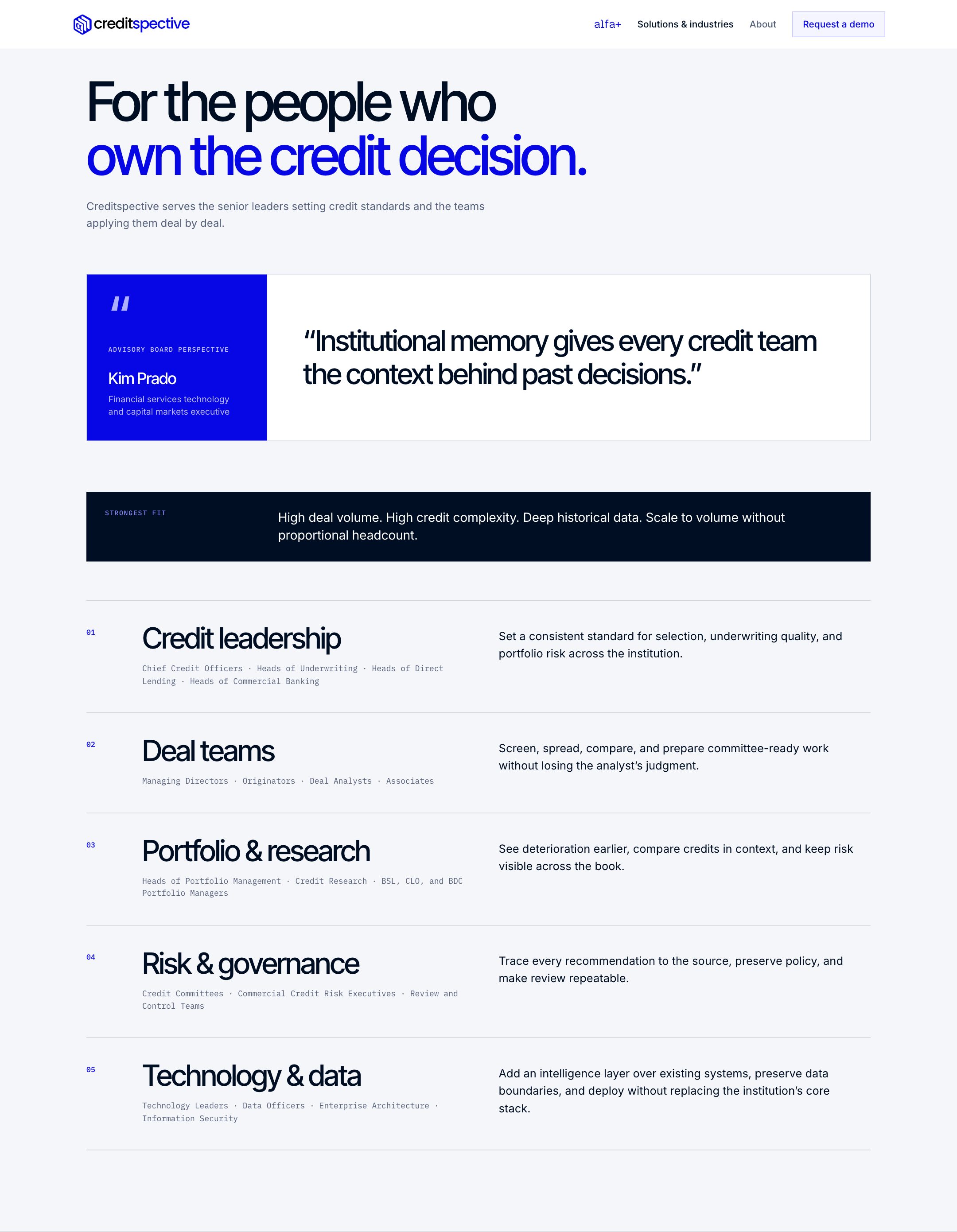
Not a picture of it. Pick an audience and the headline and the scene beneath it change. Links open creditspective.com.
Each scene is a short rendered animation of that audience at work, keyed onto a white floor so it sits on the page without a box around it.
One argument across the site: the institution already holds the judgment it needs, and the platform puts it in front of every decision.
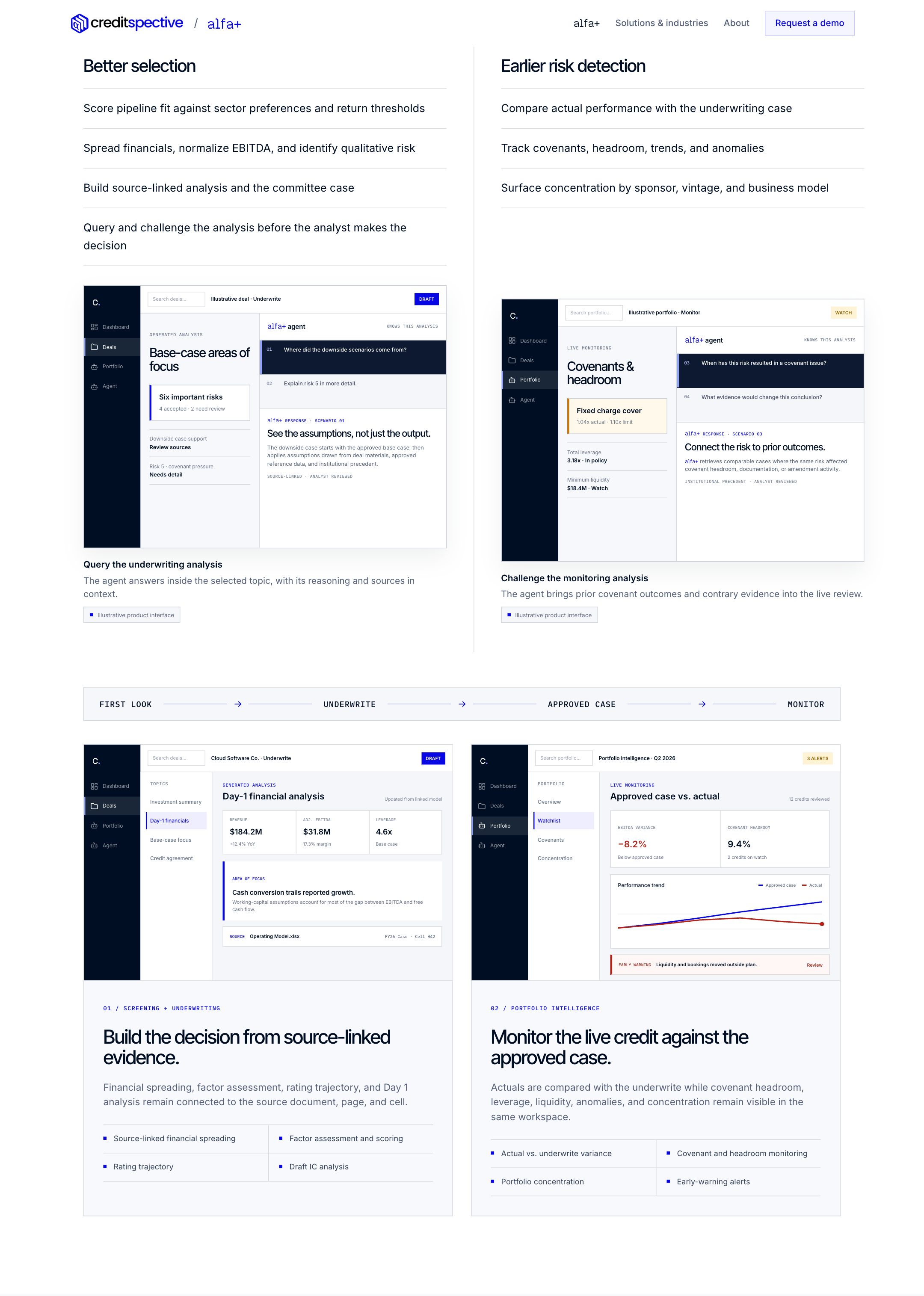
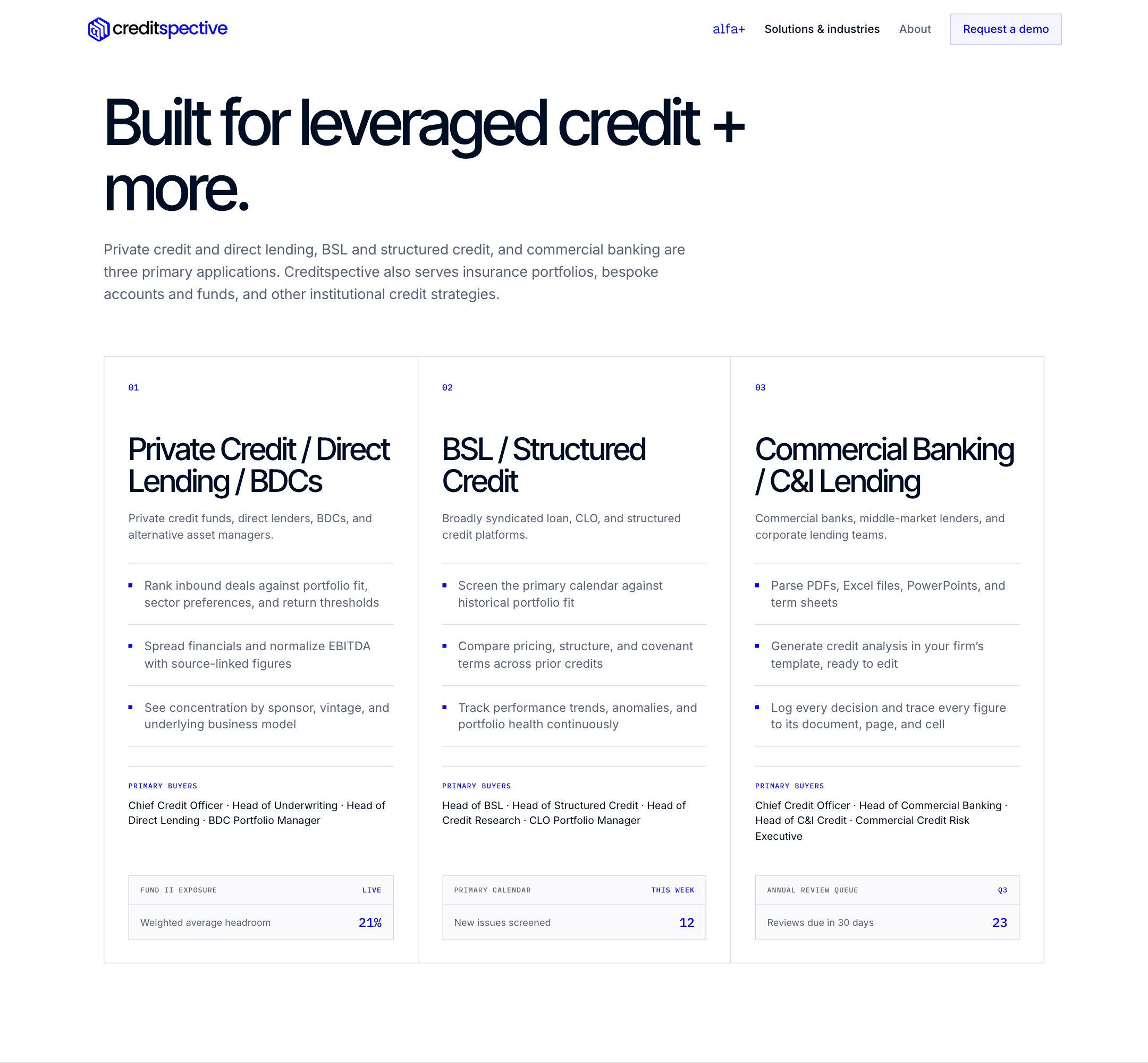

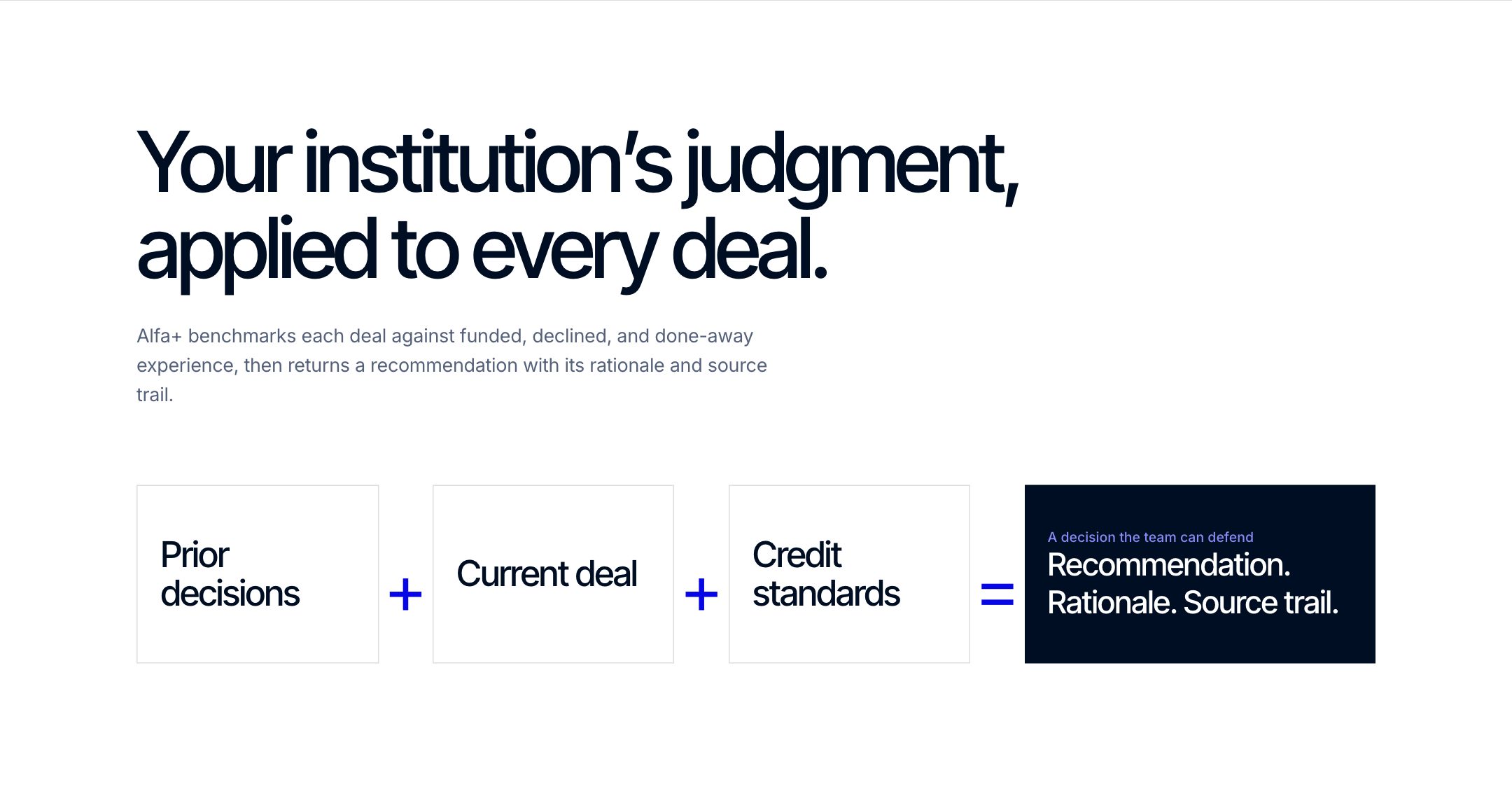
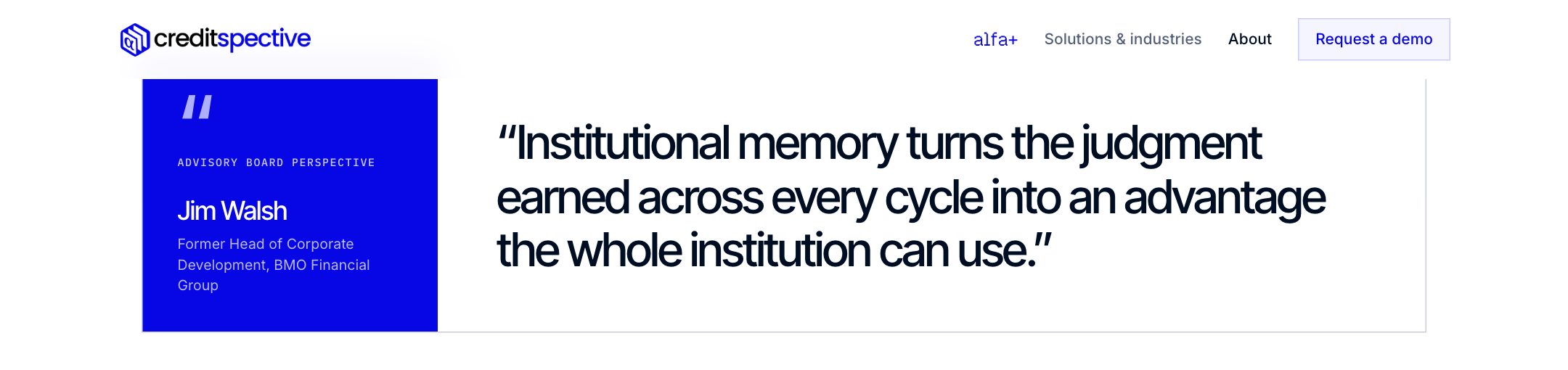
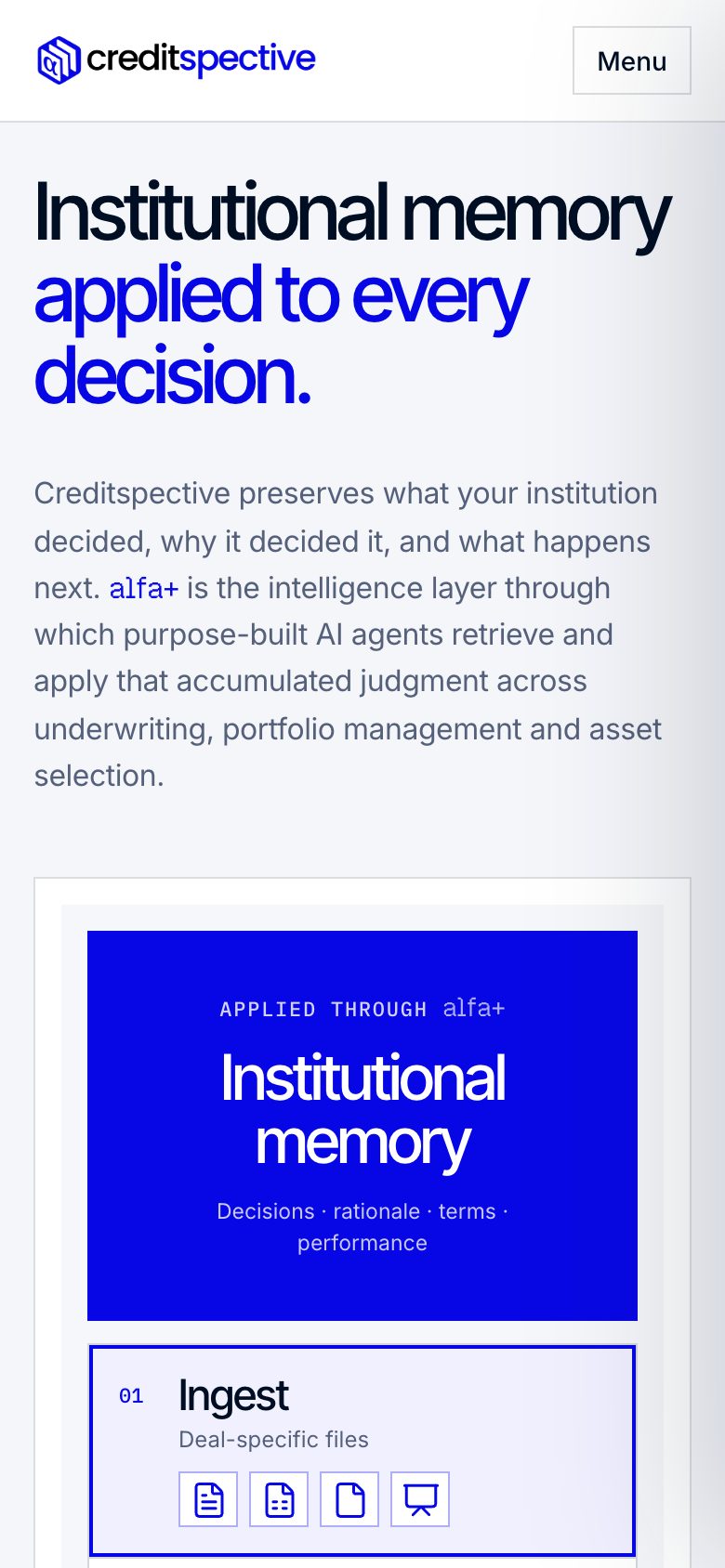
Nothing here is an exported image, so a copy change never meant redrawing a picture. Click through the stages.
alfa+ is the engine inside Creditspective, and it needed a mark of its own. We set it in a pixel face so the software reads apart from the company, which stays in a grotesque. Alpha is the goal, alfa+ is the engine.
/alfa+/alfa+Each audience has a short rendered scene keyed onto white, so it sits on the page with no frame. The line field under the solutions headline is a canvas animation that follows the cursor and rests when it scrolls out of view.
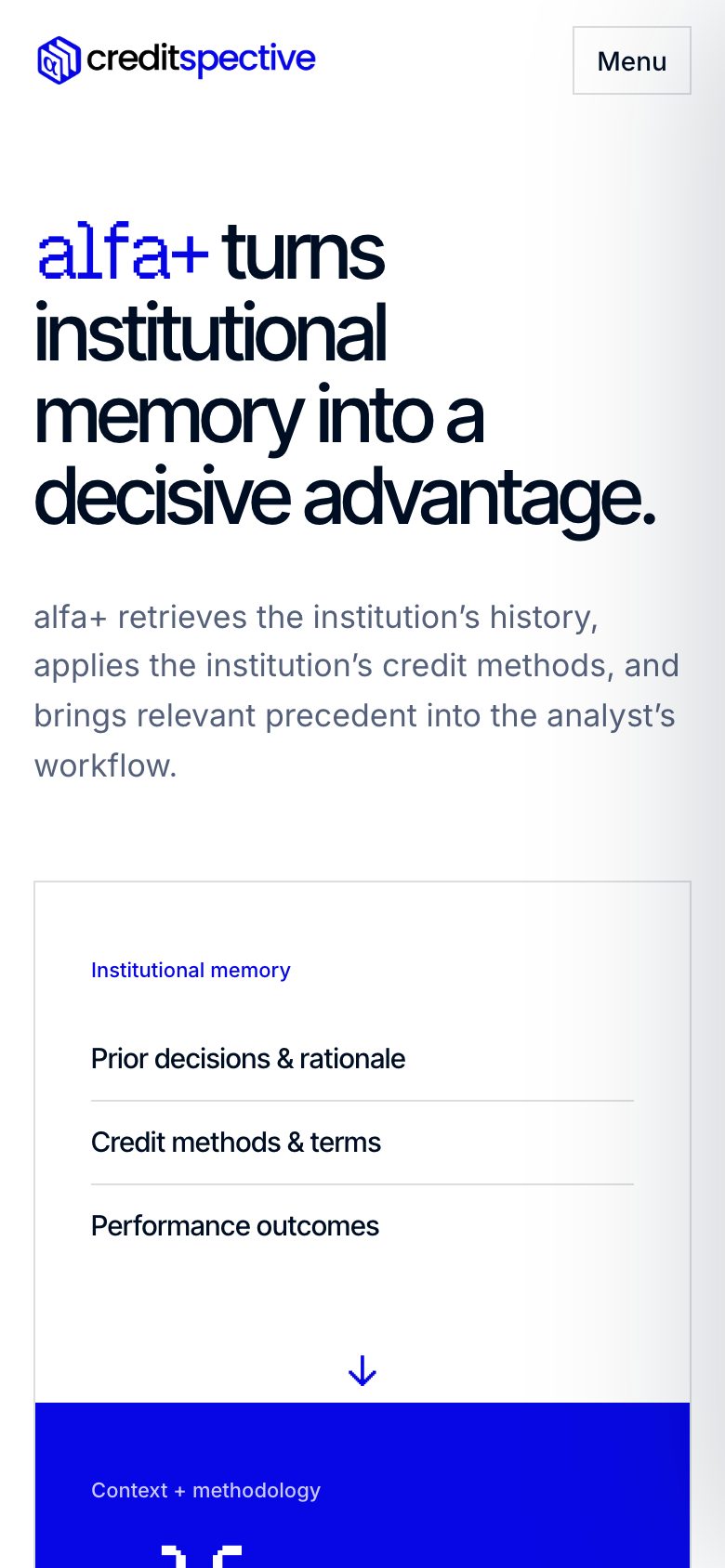
Every section reflows for a phone. Nothing is hidden on small screens, it is reordered.






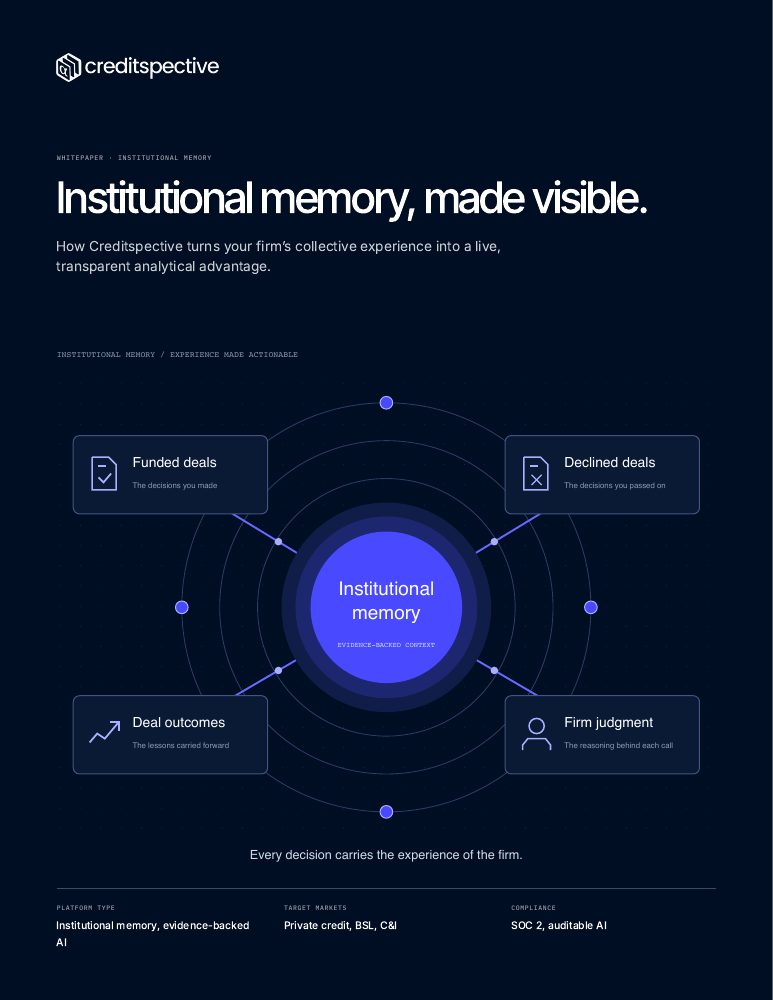
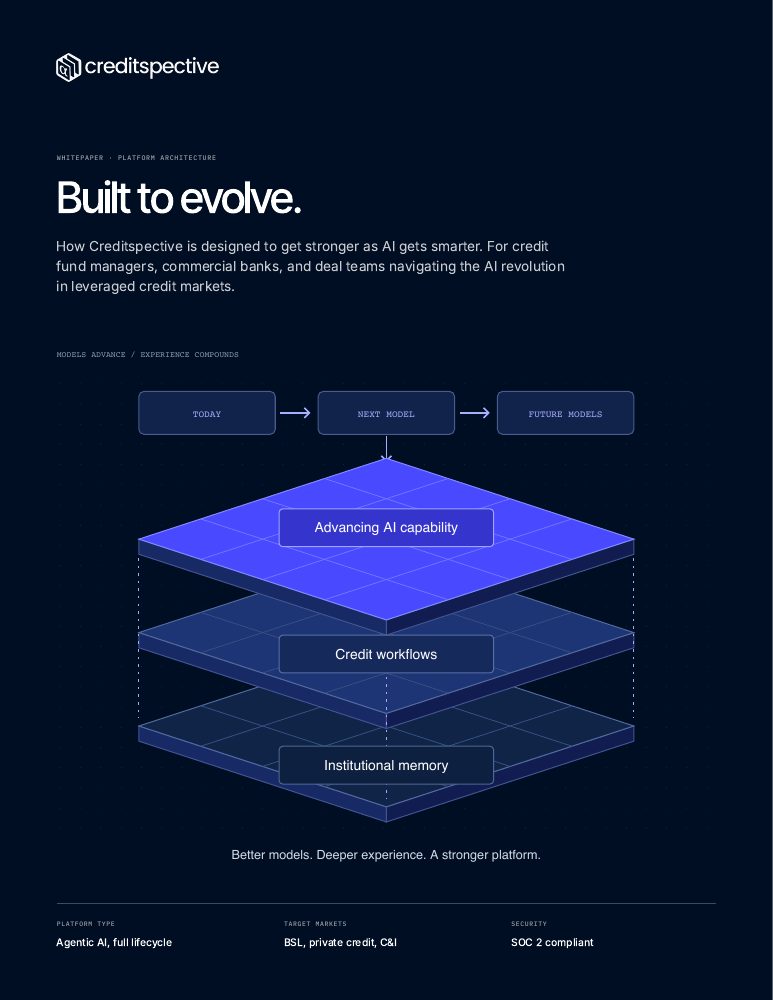
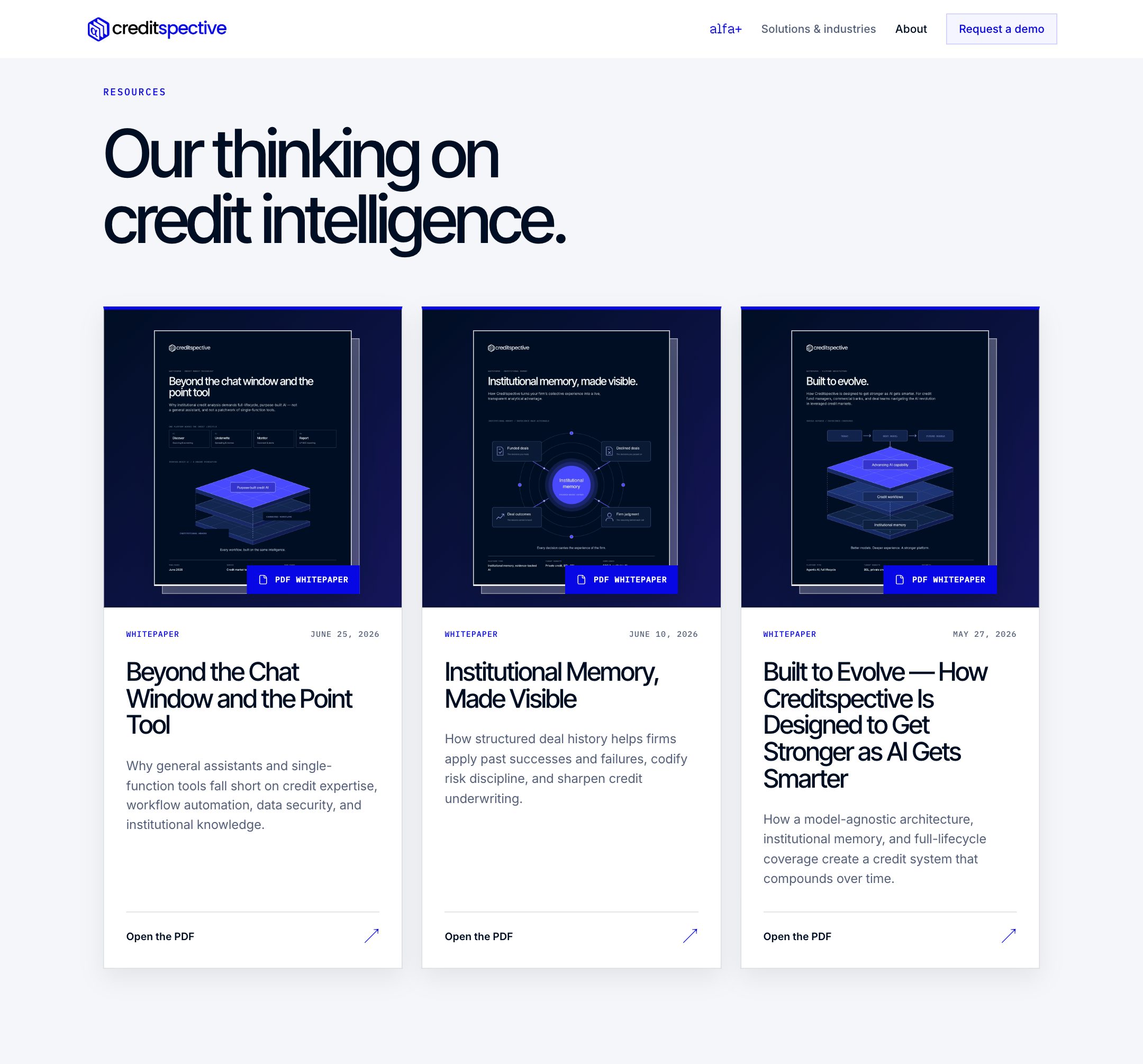
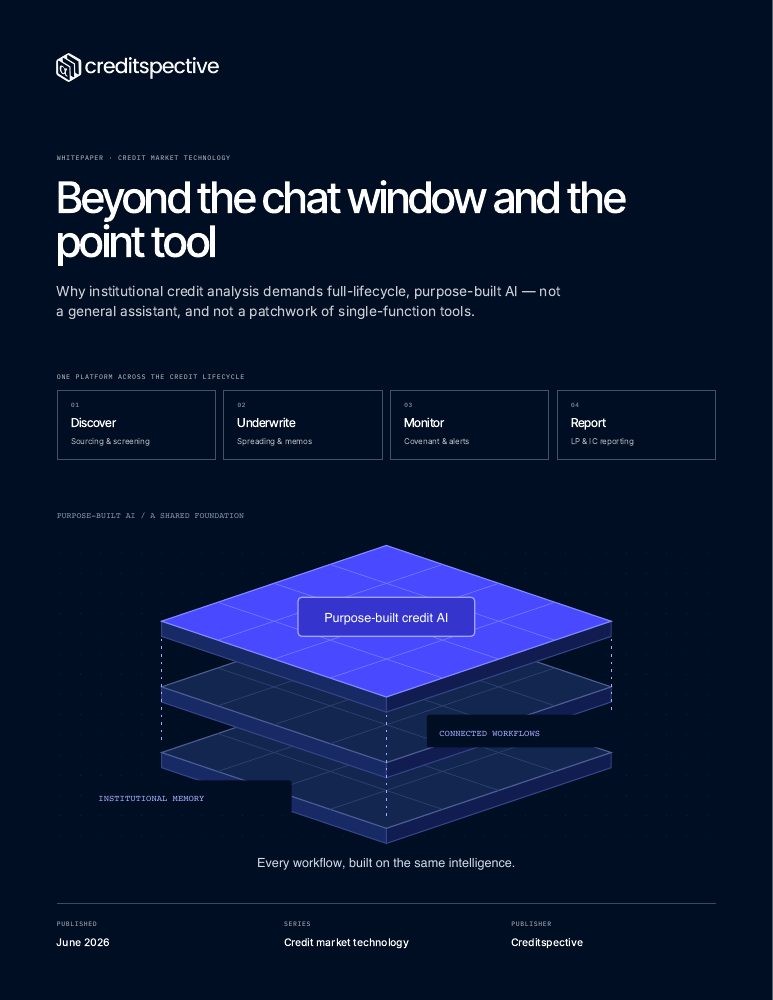
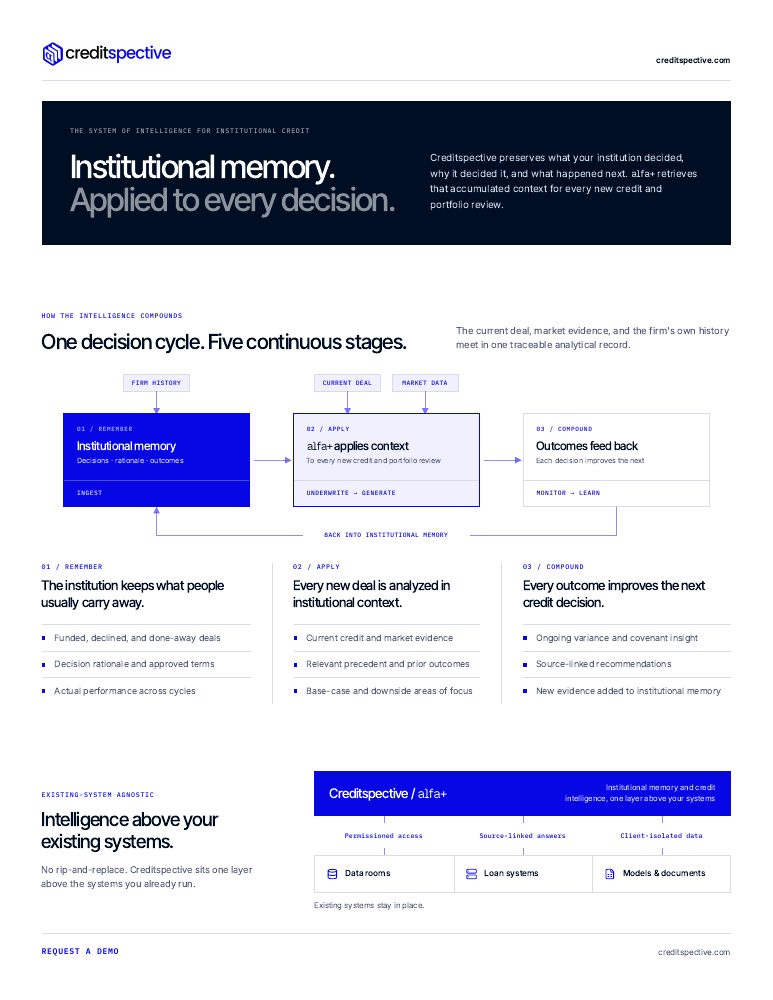
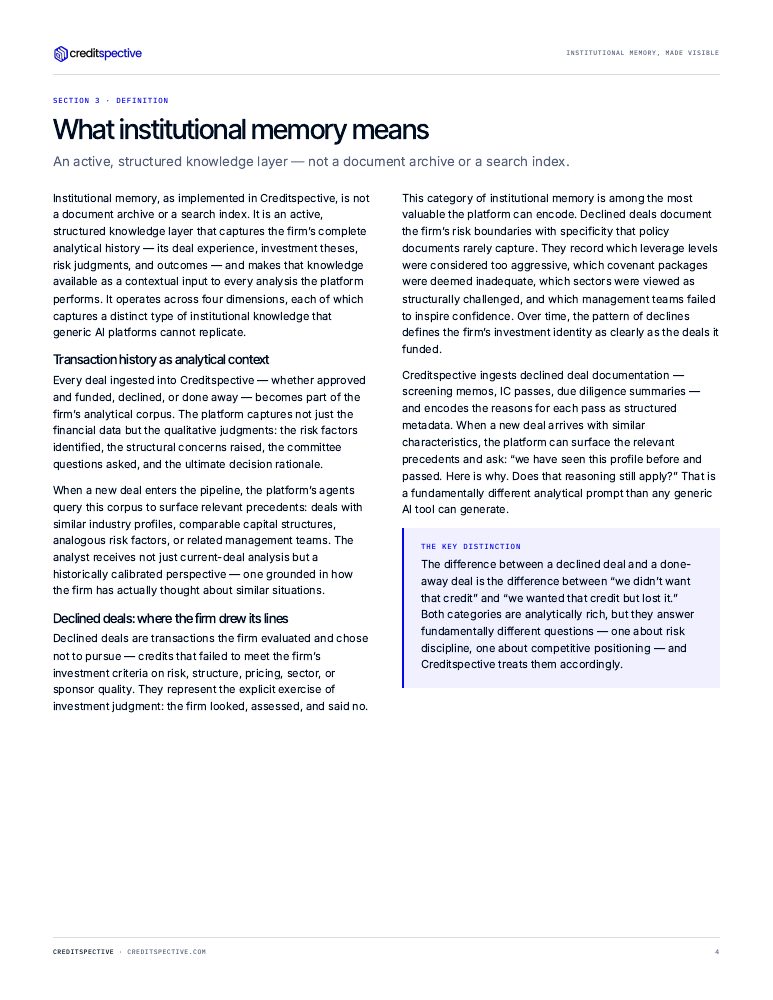
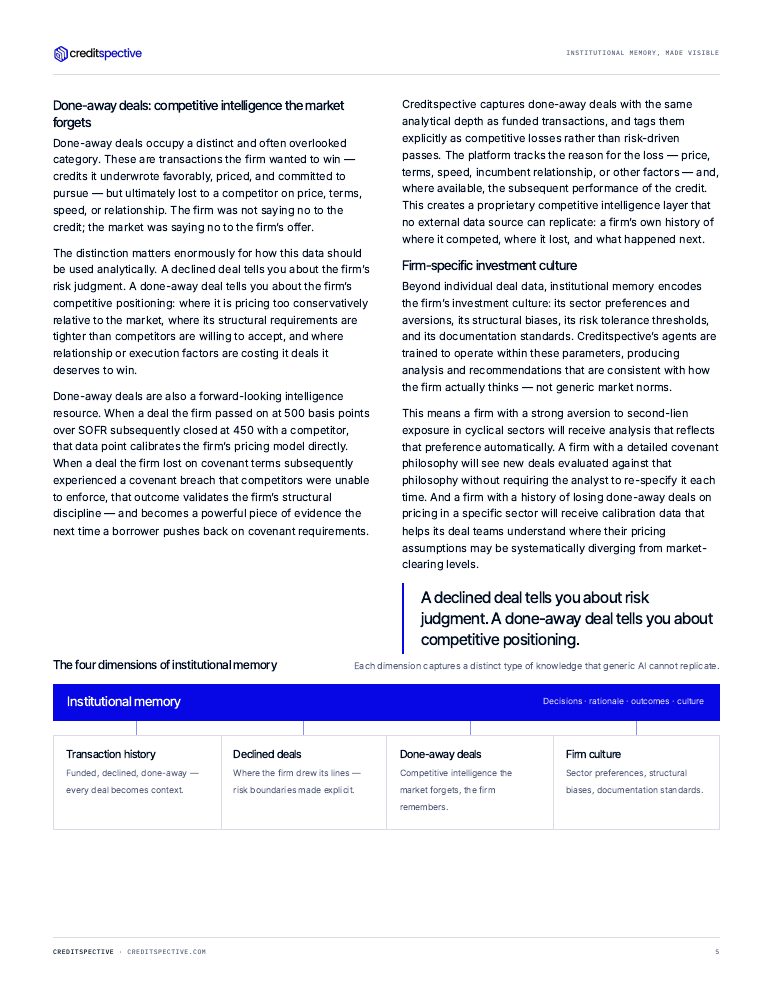
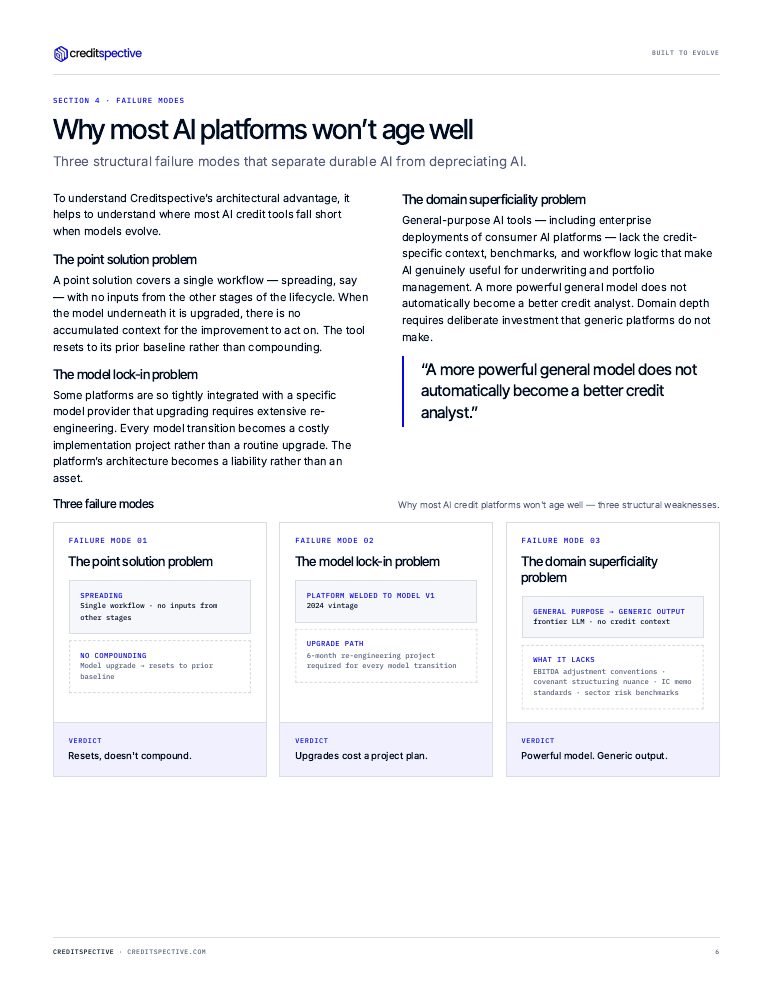
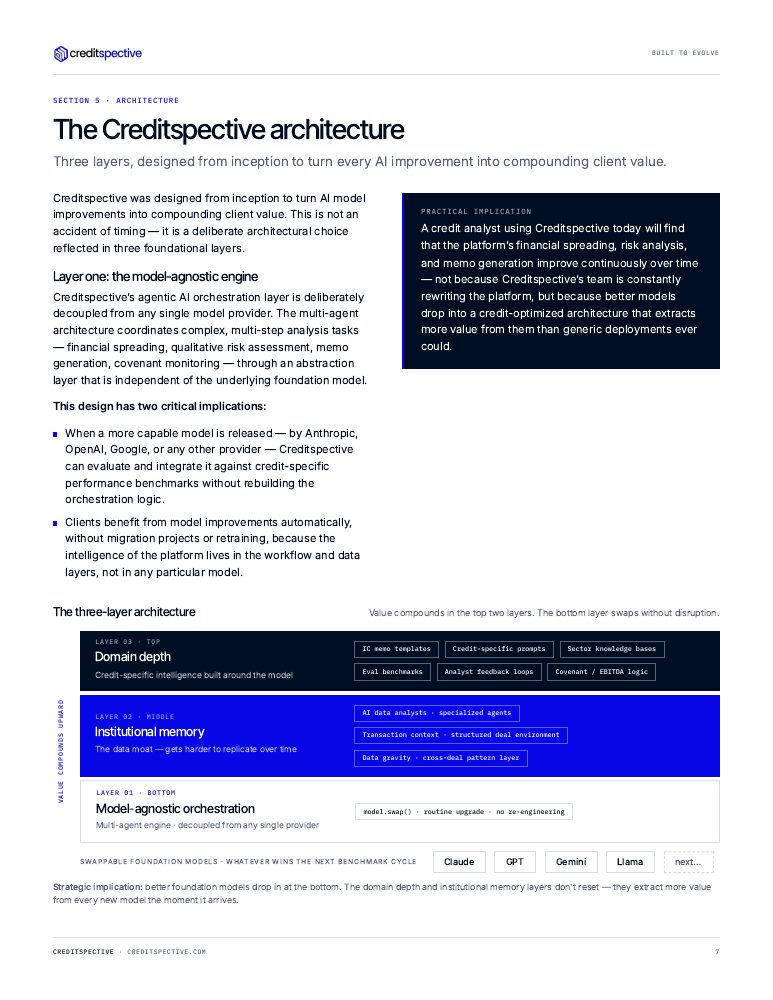
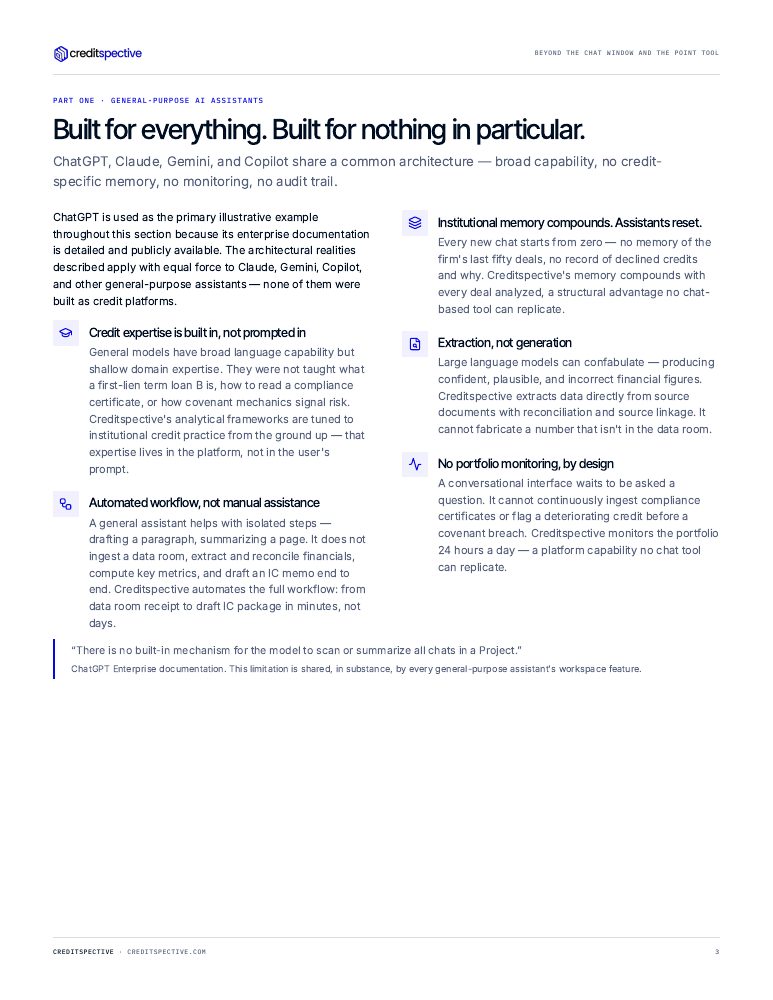
Three whitepapers and a one-page overview, rebuilt from HTML on one template with the site's typefaces, blue and diagrams. Together they went from 33 MB of exported PDFs to about 3 MB, and a wording fix now takes minutes.
Institutional memory
for credit committees,
built in code.
The first commit was a working site, and every review after that happened at a link, on the client's own screen. Changes went live the same day they were agreed, sometimes within the hour, because the site is static files deployed from GitHub to Netlify.
The diagrams and product fragments are code, so copy from No Middle was set straight into the pages as it arrived. The whitepapers work the same way: each one is an HTML document rendered to PDF by a script.